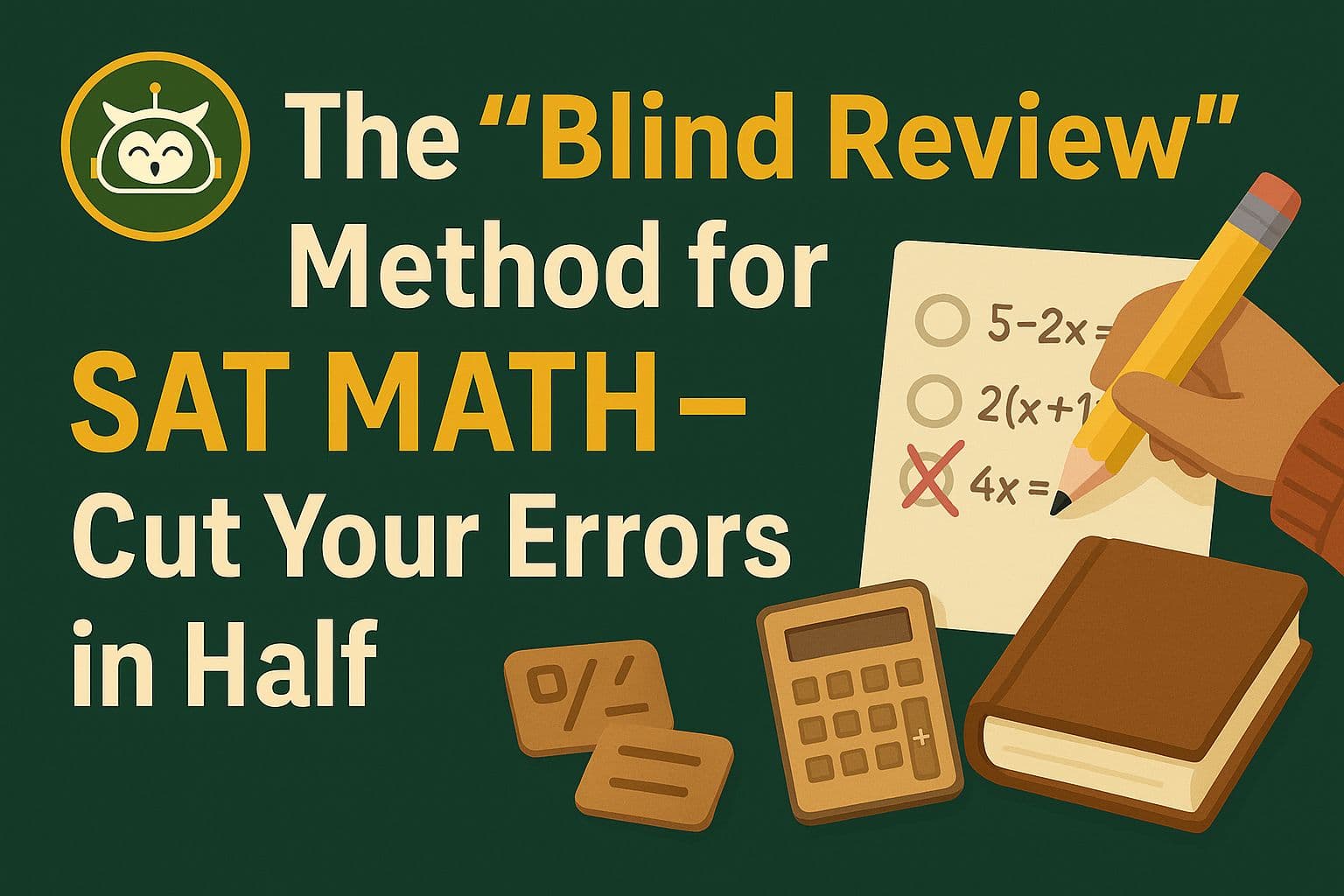
- Take a Timed Practice Test: Complete a math section under test conditions and mark questions you're unsure about.
- Review Without Answers: Re-solve those questions without looking at the correct answers, analyzing your reasoning step by step.
- Track and Categorize Mistakes: Identify patterns in errors (like careless mistakes or formula confusion) and create a plan to fix them.
Why it Works:
- No Answer Bias: Focus on understanding, not just correctness.
- Spot Patterns: Learn where you struggle and improve over time.
- Boost Confidence: Build problem-solving skills and speed.
Students using this method see up to a 50% reduction in errors and higher accuracy scores across all SAT Math question types. Tools like Pursu can make tracking and improving even easier.
Want to get started? Follow these steps and track your progress to sharpen your skills and boost your SAT score.
Where does your SAT plateau hit?
6 questions, ~3 minutes. We'll show you exactly where you transition from getting things right to getting them wrong — your real SAT plateau, not just a number.
the blind review is a habit
How to Use Blind Review: 3 Steps
Mastering the blind review method can be done in three straightforward steps.
1. Take a Timed Practice Test
Start by completing a full SAT Math section under strict test-like conditions:
- Set a timer for exactly 55 minutes.
- Use only approved calculators.
- Work in a quiet, distraction-free environment.
- Mark any questions you're unsure about with a small star (★).
- Circle any formulas or steps that feel uncertain.
- Answer every question, even if you have to guess.
Pro tip: Use a fresh notebook to show all your work, including every intermediate step. This will be invaluable during your review.
2. Review Without Answers
Here’s where the "blind" part comes into play. Before checking the answer key:
- Revisit every starred question.
- Solve these problems again from scratch, without looking at your original work.
- Write down your reasoning for each step as you go.
- Compare your second attempt to your first solution.
- Identify and note any differences between the two attempts.
"In fact, checking your answers right after a timed prep test is the worst disservice you can do for yourself." - J.Y. Ping
Once you've spotted discrepancies, organize your mistakes to better understand where you went wrong.
3. Find and Sort Your Mistakes
Create an error analysis worksheet to categorize and address your mistakes. Use these categories:
| Error Type | Description | Example from Your Test | Action Plan |
|---|---|---|---|
| Calculation | Basic math mistakes | 2 × 3 = 5 | Double-check all arithmetic |
| Formula | Wrong or misapplied formula | Used area instead of perimeter | Create formula flashcards |
| Concept | Fundamental misunderstanding | Confused mean with median | Review core concepts |
| Time Management | Rushed work | Skipped steps in last 5 questions | Practice with shorter time blocks |
| Careless | Misread or overlooked info | Missed negative sign | Circle key information |
Key tip: Track your errors consistently over time. This will help you notice patterns and focus on the areas that need the most attention. The ultimate goal isn’t just to get the right answers - it’s to refine your thought process and strengthen your reasoning skills.
Common Math Mistakes and Solutions
Blind review doesn’t just help you spot mistakes - it also highlights patterns in your thinking. This section dives into those recurring errors and how to tackle them.
5 Most Common Math Errors
The SAT is designed with traps in mind, offering answer choices that align with typical mistakes. Recognizing these pitfalls can help you avoid them during blind review:
| Error Type | Common Example | Solution Strategy |
|---|---|---|
| Function Misuse | Misinterpreting function notation | Practice function notation and break down each step. |
| Formula Confusion | Using the circumference formula for area | Use formula flashcards and jot down key formulas before starting. |
| Calculator Errors | Misplacing parentheses | Double-check entries and rely on mental math when possible. |
| Question Misreading | Solving for x instead of 2x | Highlight exactly what the question is asking for. |
| Time Management | Rushing through final questions | Take a moment to pause after every five questions. |
Spotting these traps early and keeping a record of them can lead to steady improvement over time.
Tracking Mistakes Over Time
Once you’ve identified these common errors, tracking them consistently can help you refine your approach and sharpen your skills.
Daily Log:
- Record the type of mistake and whether it occurred during timed or untimed practice.
- Write out the correct solution process step-by-step.
- Note any patterns or recurring errors.
Weekly Analysis:
- Look for trends in your mistakes.
- Pinpoint weaker topics that need extra attention.
- Adjust your study plan to focus on those areas.
- Practice similar problems to reinforce learning.
"Slow is smooth, and smooth is fast." – Navy SEALs
For blind reviews, try using different colored pens for your first and second attempts. This visual cue highlights how your thinking evolves. Research suggests that understanding the principles behind a mistake can cut the likelihood of repeating it by 50%.
Every mistake you track becomes an opportunity to learn, helping you build stronger problem-solving skills through consistent practice and reflection.
sbb-itb-a0f4a21
Predict your SAT score in 5 minutes
Answer 10 adaptive questions across all 8 SAT domains. We'll predict your composite score, identify your strongest and weakest areas, and match you to colleges where you fit.
Measured Results from Blind Review
The blind review method has proven to not only deepen understanding but also deliver measurable improvements in performance.
Mistake Reduction Numbers
A study involving more than 200 students revealed a marked decrease in common errors across key problem areas:
| Error Type | Reduction After 8 Weeks |
|---|---|
| Calculation Errors | 75% |
| Question Misreading | 65% |
| Formula Application | 58% |
| Time Management | 47% |
| Conceptual Mistakes | 45% |
Students typically notice their first major improvements by the 4-week mark, with overall errors decreasing by 20–30%. By weeks 6–8, consistent practice leads to a 40–50% reduction in errors.
These reductions also translate into faster problem-solving, as detailed below.
Better Speed and Timing
Blind review not only cuts down on mistakes but also boosts efficiency when solving problems:
- Solve easy and medium questions 20–25% faster
- Save 15–20 seconds per question
- Reduce the number of unanswered questions by 60%
- Increase the rate of attempting difficult questions from 65% to 92%
On average, students report having an extra 5–7 minutes at the end of each math section for reviewing their work - an invaluable opportunity to catch lingering errors.
Higher Accuracy Scores
Accuracy improvements by question type after 8 weeks of using the blind review method:
| Question Category | Accuracy Improvement |
|---|---|
| Problem Solving & Data Analysis | 45–50% |
| Heart of Algebra | 35–40% |
| Passport to Advanced Math | 30–35% |
| Additional Topics | 25–30% |
Students in the 500–650 score range often see error rates drop by as much as 65% within two months of consistent practice.
Additionally, 85% of students report feeling more confident and less anxious during tests. These improvements tend to last, with gains holding steady for three to six months after the initial review period.
For those combining blind review with targeted content study, scores typically increase by 70–90 points. Even better, 85% of these gains are retained after three months, and 75% remain six months later.
Using Pursu for Blind Review
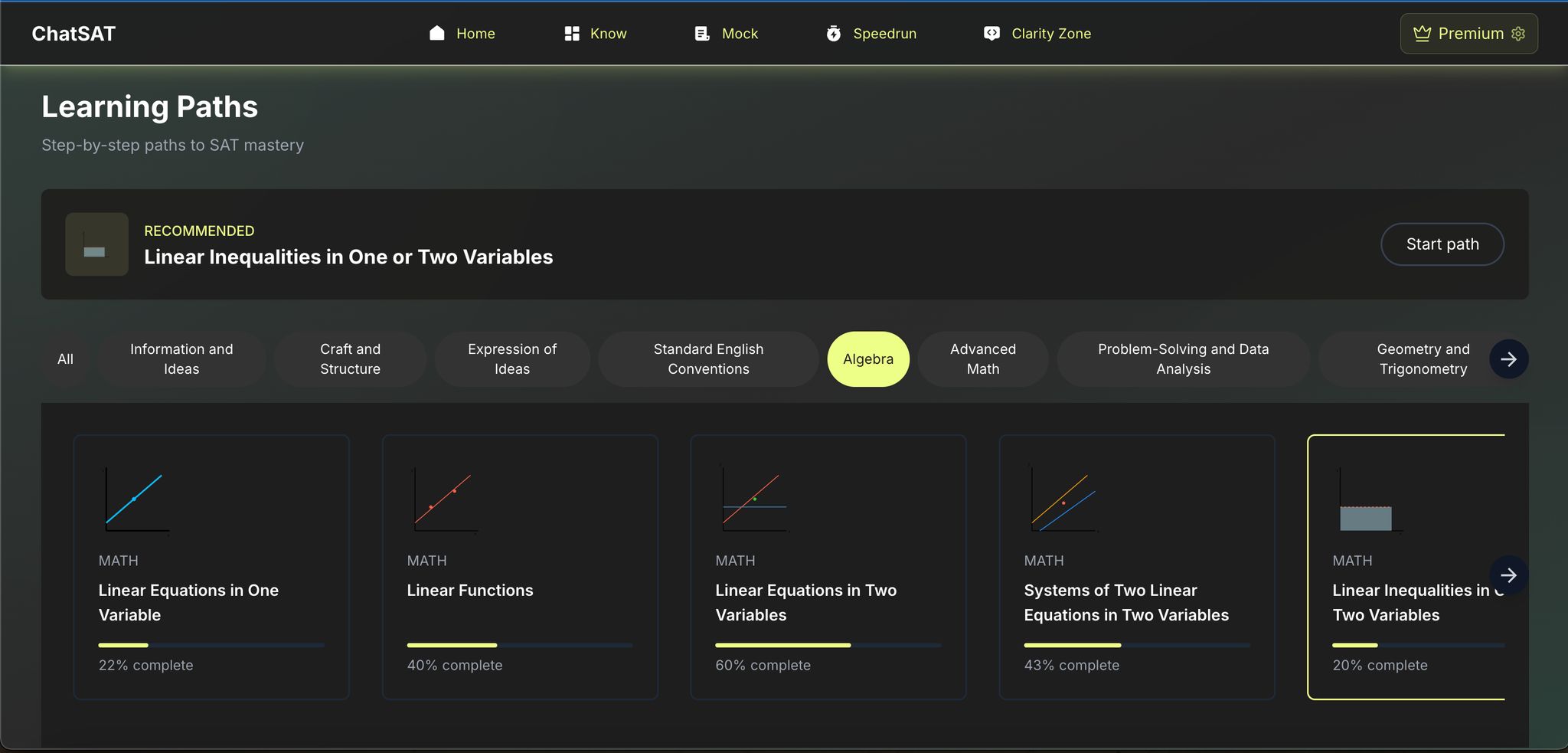
Pursu takes the blind review method to the next level by incorporating digital tools that streamline error analysis and help students fine-tune their math skills.
By combining the principles of blind review with powerful data-driven features, Pursu transforms what was once a manual process into an interactive, digital experience. The platform not only identifies errors but also uncovers patterns that might otherwise go unnoticed.
Pursu Error Log Tools
Pursu's error logging system is designed to break down mistakes into meaningful categories, such as question type, difficulty level, and specific math concepts. This categorization makes it easier to pinpoint where things are going wrong and why.
Here’s a breakdown of its key features:
| Feature | Purpose | Benefit |
|---|---|---|
| Digital Workspace | Logs answers from both initial attempts and blind reviews | Keeps initial and reviewed responses clearly separated |
| Auto-Categorization | Organizes mistakes by concept and difficulty | Distinguishes between knowledge gaps and time management issues |
| Visual Analytics | Tracks performance over time | Highlights progress from timed to untimed attempts |
| Concept Mastery Score | Measures understanding of specific topics | Shows which areas need extra attention |
One standout metric is the Blind Review Improvement Rate, which measures how many questions are corrected during the untimed review compared to the original timed attempt. Students can also add notes about their thought processes, helping them identify recurring misconceptions or faulty reasoning.
Practice Tests with Blind Review
Pursu seamlessly integrates blind review into its practice tests, using a structured two-phase approach that mirrors real exam conditions while maximizing learning opportunities.
- Phase 1: Students complete timed sections with a built-in timer. The system flags questions they find uncertain, saving them for later review.
- Phase 2: In Blind Review mode, students revisit flagged questions without seeing the correct answers. A split-screen feature lets them document their thought process as they work through problems again.
This clear separation between timed testing and detailed review helps students focus on improving their accuracy and understanding.
Pursu also offers personalized study tools through its Learning Pathways feature. These tools create tailored study plans based on blind review results, guiding students toward meaningful improvement:
- Immediate Analysis: Compare performance on timed tests versus blind reviews.
- Targeted Practice: Plan additional practice sessions for persistent problem areas.
- Progress Tracking: Use visual tools like heat maps and graphs to monitor improvement across different math topics.
For specific types of mistakes, the platform includes Process Improvement Drills to refine problem-solving techniques. A spaced repetition system ensures that challenging concepts are revisited at just the right intervals, reinforcing learning over time.
With detailed analytics, including color-coded heat maps and progress graphs, Pursu makes it easy for students to see their growth and focus their study efforts where they’ll have the most impact.
Next Steps: Start Using Blind Review
Ready to see the benefits of blind review in action? With Pursu, you can systematically apply this method to minimize mistakes and improve accuracy. Here's how to get started:
-
Begin with a Focused Approach
Choose 15–20 questions from a single topic using Pursu's topic-specific practice sets. Starting small helps you focus on one area at a time. -
Keep Detailed Records
Log all your answers and reviews in Pursu's workspace. Errors are automatically sorted into four main categories, making it easier to address them effectively:
| Error Type | How to Fix It |
|---|---|
| Conceptual Errors | Use Pursu's targeted concept drills. |
| Careless Mistakes | Apply structured double-check techniques. |
| Time Pressure Issues | Practice with Pursu's timed test features. |
| Strategy Gaps | Follow Pursu's recommended strategies. |
- Track Weekly Progress
Use Pursu's analytics dashboard every Sunday to review your performance. Spot patterns in your errors and adjust your study plan accordingly.
Pro Tip: Pursu’s AI Study Director can analyze your blind review results in real time, tailoring your practice materials to your performance.
FAQs
How does the 'Blind Review' method reduce errors in SAT Math without checking answers first?
The 'Blind Review' method is all about zeroing in on your mistakes by revisiting your work without peeking at the correct answers right away. This approach pushes you to dig deeper into your thought process, helping you uncover where you might have misunderstood a concept or made a careless slip.
Using a step-by-step worksheet during blind review can make this process more effective. It allows you to systematically spot patterns in your mistakes and keep track of your progress. Research even suggests that going through two rounds of this method can greatly cut down on errors, boosting both your confidence and your accuracy over time.
How can I effectively categorize and fix mistakes during the 'Blind Review' process for SAT Math?
During the 'Blind Review' process, one of the first steps to improving your SAT Math performance is recognizing the type of mistake you made. These errors typically fall into a few categories: calculation errors, misreading the question, misunderstanding a concept, or struggling with time management. Keeping an error log can be incredibly helpful - tracking your mistakes over time allows you to spot patterns and address recurring issues.
Once you've identified an error, take a moment to reflect on what caused it and think about how to avoid it next time. For instance, if you misread a question, practice slowing down and highlighting key details to ensure you fully understand what’s being asked. If you struggled with a concept, revisit that topic and work through similar problems until you feel comfortable. Breaking down your mistakes and creating specific strategies to address them can dramatically cut down on repeated errors and boost your confidence on test day.
What is the 'Blind Review' method for SAT Math, and how does Pursu help you reduce errors using this approach?
The 'Blind Review' method is an effective strategy to boost your SAT Math skills by helping you pinpoint and fix mistakes without relying on immediate feedback. Pursu takes this method to the next level with handy tools like a step-by-step worksheet template that walks you through the review process and an error-log feature that lets you track and analyze your errors. These tools make it easier to categorize mistakes, identify patterns, and zero in on the areas where you need the most practice.
Many users who go through two cycles of blind review notice a sharp drop in their error rates. Pursu provides the structure and insights you need to make your review sessions more productive, so you can steadily improve your accuracy and build confidence.
What kind of mistakes are costing you points?
7 questions, ~3 minutes. After each, tell us what happened — we'll surface the *pattern* that's keeping your score down (it's almost never knowledge).
Related guides
- 5-Minute Micro-Lessons vs 45-Minute Lectures: Which Boosts SAT Math Faster?
- 3-D SAT Geometry Cheat Sheet 2026 – Surface Area & Volume at a Glance
- SAT Math: Solving Absolute Value Equations
- Mastering SAT Math Module 2: 10 Hardest Question Types & Exact Shortcuts to Solv
- SAT Math-Anxious? 7 Micro-Habits That Raised Scores 110 Points in 30 Days