
Want to score 1500+ on the SAT? It’s not about talent - it’s about consistent, smart study habits. Here’s how top scorers do it:
- Study Hours Matter: Need a 150+ point boost? Plan for 80+ hours of focused prep. Aiming for 200+? Dedicate 150+ hours.
- Daily Practice Works: Regular study beats cramming. Balance vocabulary, math, reading, and grammar daily.
-
Key Techniques:
- Error Analysis: Learn from mistakes.
- Time Management: Stick to a realistic schedule.
- Targeted Practice: Focus on weak areas.
-
Sample Schedule:
- Morning: Review vocabulary.
- Afternoon: Practice math.
- Evening: Work on reading and grammar.
Pro Tip: Use tools like Pursu to customize your prep, track progress, and focus on what matters most.
Consistent effort + smart strategies = SAT success.
Where does your SAT plateau hit?
6 questions, ~3 minutes. We'll show you exactly where you transition from getting things right to getting them wrong — your real SAT plateau, not just a number.
Key Elements of SAT Study Success
Regular Practice vs. Last-Minute Study
Consistent practice beats cramming every time. Studies show that dedicating structured hours to study leads to better results:
| Study Approach | Weekly Hours | Score Improvement | Total Study Hours |
|---|---|---|---|
| Low Intensity | 3.5 | 10–100 points | 20+ |
| Medium Intensity | 6.5 | 100–150 points | 40+ |
| High Intensity | 10 | 150–200 points | 80+ |
Regular, focused practice allows you to pinpoint problem areas, strengthen weak concepts, and measure your progress over time. This method also makes it easier to fit studying into your daily routine.
Mixing SAT Prep with Daily Life
Incorporating SAT prep into your everyday life can help you stay consistent without feeling overwhelmed. For example, you could break down 6.5 weekly study hours like this:
- Morning: Review vocabulary over breakfast
- Midday: Work on math problems during study hall or free periods
- Evening: Practice reading comprehension before dinner
- Night: Do a quick grammar review before bed
Customize the timing and intensity to suit your goals. If you're aiming for a big score jump, plan for longer sessions. For smaller improvements, shorter but focused study periods might work better.
Creating Your Study Schedule
To build an effective study schedule, follow these three steps:
-
Set a Target Score
Use the 75th percentile scores of your preferred colleges to determine your goal. -
Estimate Needed Study Hours
Compare your current score to your target and calculate how many hours you'll need based on the table above. -
Organize Materials and Plan
Gather study guides, practice tests, and other resources, then map out your study hours to hit your target.
Keep your schedule flexible so you can adjust as needed. Focus more time on areas where you're struggling, while still reinforcing your strengths.
Daily Schedules by Student Type
High School Student Schedule
High school students juggle SAT preparation alongside classes and activities. Here’s a sample schedule to help manage both:
| Time | Activity | SAT Focus |
|---|---|---|
| 6:00 AM | Wake up & breakfast | Review 5 vocabulary words |
| 7:00 AM–2:30 PM | School | Use study hall for math practice |
| 3:00 PM–4:30 PM | SAT study | Core preparation time |
| 4:30 PM–6:00 PM | Extracurriculars | Take a mental break |
| 7:00 PM–8:30 PM | Homework & SAT review | Combine schoolwork with SAT prep |
| 9:00 PM | Light review | Recap grammar rules |
| 10:00 PM | Bedtime | Recharge for the next day |
This plan provides around 6.5 hours of SAT prep each week, which aligns with an expected 100–150 point score improvement.
Gap Year Student Schedule
Gap year students have more flexibility, allowing for longer and more focused study periods. Here’s a structured schedule to make the most of their time:
| Morning Block | Afternoon Block | Evening Block |
|---|---|---|
| 8:00–10:00 AM: Math practice | 1:00–3:00 PM: Reading comprehension | 6:00–7:30 PM: Writing & Language |
| 10:30–11:30 AM: Vocabulary | 3:30–4:30 PM: Targeted practice | 8:00–9:00 PM: Review mistakes |
Weekend Study Schedule
Saturday:
- 8:00 AM–10:30 AM: Full practice test
- 11:00 AM–12:00 PM: Review answers
- 2:00 PM–4:00 PM: Focus on weak areas
Sunday:
- 9:00 AM–11:00 AM: Topic-specific practice
- 1:00 PM–3:00 PM: Mock test sections
- 3:30 PM–4:30 PM: Analyze errors
Must-Have Parts of Daily SAT Prep
Study Block Timing
Break your study time into focused intervals with short breaks in between. Switch subjects after each break to keep your mind fresh and engaged. Figure out how long you can focus effectively and stick to a daily routine that works for you. This method keeps your study sessions productive and manageable.
Rest and Food Guidelines
Sleep and nutrition play a huge role in how well you study. Aim for 7-9 hours of sleep each night to help your brain retain information. Start your day with a solid breakfast, and keep your energy steady with balanced meals and healthy snacks. Don’t forget to drink water regularly - it helps keep your mind sharp.
Study During Daily Tasks
Turn everyday moments into SAT prep opportunities:
- Stick vocabulary cards on your bathroom mirror for quick reviews while brushing your teeth.
- Listen to math or grammar audio lessons during your commute.
- Work on SAT concepts during short breaks or between sets at the gym.
These small, focused efforts add up over time and fit seamlessly into your daily routine, giving you extra prep time without disrupting your schedule.
sbb-itb-a0f4a21
Predict your SAT score in 5 minutes
Answer 10 adaptive questions across all 8 SAT domains. We'll predict your composite score, identify your strongest and weakest areas, and match you to colleges where you fit.
How I Got a 1500+ | Study Tips for the Digital SAT in 2024
Using Pursu for Better Results
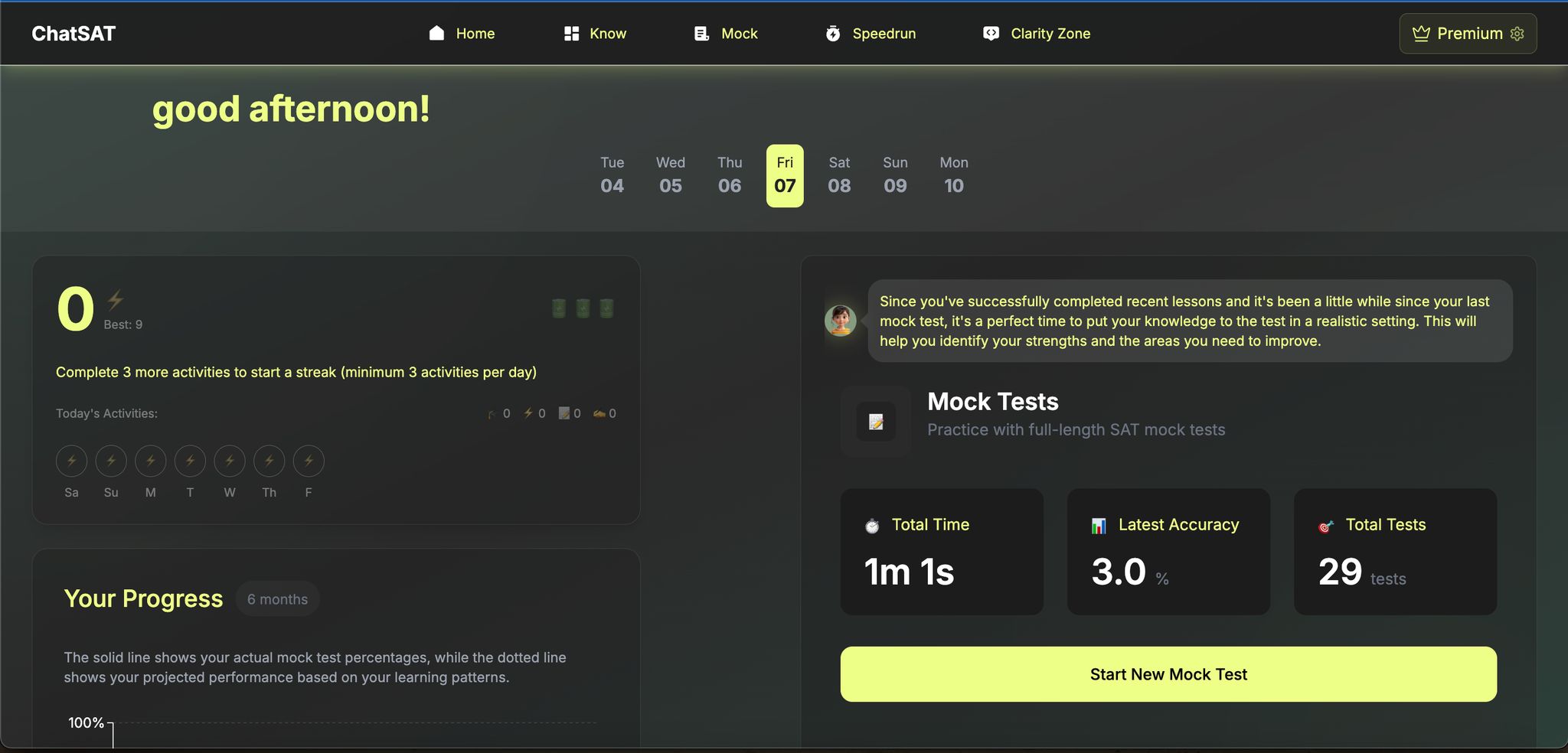
Structured daily routines are essential, but AI-powered tools like Pursu can take your study sessions to the next level. Pursu uses real-time analysis to adjust to your study needs, removing the guesswork from your preparation.
Here’s how Pursu fits into your daily schedule:
- Morning Sessions: Begin with targeted practice tests that focus on areas where you need improvement.
- Afternoon Review: Use the smart review feature to concentrate on specific topics flagged for extra attention.
- Evening Practice: Take full-length mock tests to build endurance and track your progress over time.
With 24/7 support, Pursu ensures uninterrupted study sessions. Whether you're stuck on a tricky problem in the morning or need help during a late-night review, instant assistance keeps your momentum going.
Traditional study methods often leave students wondering what to focus on next. Pursu eliminates this uncertainty by using data to guide your daily routine. Here's a quick comparison of how Pursu enhances key study components:
| Study Component | Basic Approach | Pursu's Method |
|---|---|---|
| Practice Tests | Fixed question sets, regardless of skill level | Adjusts questions based on your performance |
| Progress Tracking | Manual tracking of scores and weak areas | Automated analysis with targeted recommendations |
| Study Planning | Generic schedules | Custom study plans based on real-time progress |
| Problem Areas | Self-identified weak spots | AI pinpoints improvement opportunities |
| Review Sessions | Covers all topics equally | Focuses on areas where you need the most help |
Pursu’s expert-designed questions align closely with SAT standards, ensuring your practice stays relevant. This approach blends seamlessly with your daily routine, making SAT prep more efficient without adding unnecessary stress.
For even better results, schedule adaptive tests during your peak focus hours. Smart scheduling identifies the best times for practice, helping you make steady progress toward your goal score.
Conclusion
To achieve a top SAT score, you need a structured study plan combined with consistent effort. Students aiming to improve by 130–200 points typically require around 80 hours of focused preparation, while those targeting gains of 200+ points may need at least 150 hours of dedicated study time.
Key Takeaways
Success on the SAT hinges on effective time management and regular practice. To maximize your results, focus on these strategies:
- Daily Vocabulary Practice: Add 10–20 new SAT words to your repertoire each day using reading materials and flashcards.
- Timed Practice Tests: Gradually shorten time limits for practice sections to improve both speed and accuracy under pressure.
- Targeted Review: Carefully analyze your mistakes to understand where you went wrong and prevent repeated errors.
For an even more tailored approach, take advantage of Pursu's tools. Its personalized testing and smart review features can help you zero in on the areas where you’ll see the biggest improvements.
What kind of mistakes are costing you points?
7 questions, ~3 minutes. After each, tell us what happened — we'll surface the *pattern* that's keeping your score down (it's almost never knowledge).
Related guides
- Purdue Engineering in 2026: Beat the 1490 SAT Mark & Show Calculus to Get the Ye
- 3-Month SAT Study Plan: From 1350 to 1500 Before the Dec SAT
- November SAT Retake Strategy: How to Fix What Went Wrong in October
- Game-Day Nutrition & Sleep Hacks for 1500+ Test-Takers
- Pre-Med Hopeful? How a 1500 SAT Offsets a 3.7 GPA in BS/MD Apps